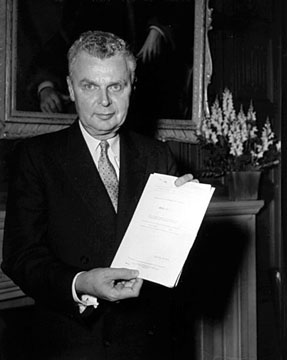
Who was Pierre E. Trudeau?

What set him apart from those who came before?

Pierre Trudeau was the 15th prime minister of Canada, serving from 1968 to 1979 and from 1980 to 1984. This makes Trudeau the third longest running prime minister. Trudeau is most well known for the patriation of the constitution, which includes the Charter of Rights and Freedoms. Trudeau was a federalist and a sharp critic of the Quebec nationalist movement during the quiet revolution. Trudeau wouldn't give in to the demands of Quebec, but still made attempts to bring the French and English speaking populations together.

Rob Mieremet / Anefo, CC0, via Wikimedia Commons

Patriation of the Constitution

Bringing the constitution to Canada.

When Canada was established as a dominion in 1867, the British North America Act (Now known as the Constitution Act of 1867) was the main portion of our constitution. Whilst it unified Canada into provinces, Canada was unable to change it. The consitution of Canada was only able to be changed by Britain. Governments throughout the years have all wanted to "patriate" the consitution (Patriate being a purely Canadian term, similar to repatriate). Unfortunatly, they all faced the same issue: The federal and provincial governments couldn't agree on an ammending formula. Now this is where Trudeau comes in. As stated before, Trudeau was a federalist, meaning he strongly believed in the division of powers between the federal and provincial governments. Trudeau may not have had many of the provinces on his side, but he didn't need them.

Signing of the Constitution Act of 1982
Quebec flag lowered half-mast due to a mass shooting, unrelated to the topic of the paragraph

Nearly all the provinces didn't like how Trudeau was going about patriation (All but Ontario and New Brunswick), and brought the case all the way to the Supreme Court of Canada. They ultimately decided that Trudeau was technically allowed to go to Britain alone, without the province's aproval. That doesn't mean that it was that simple, as they still would need to agree on an ammending formula. This was a long, boring, but ultimately boring process which would eventually result in Quebec not signing the constitution. There was a lot of signing of documents going on behind Quebec's back, and they were not happy. In fact, the day the new constitution act was signed, Quebec's flag was lowered half-mast. Trudeau showcased a level of perserverence that no other previous prime minister could cough up before. During the discussion regarding the Statute of Westminster, Canada had the opportunity to "patriate" its constitution, but again the levels of government couldn't agree on an amending formula, resulting in nothing actually changing regarding the constitution.
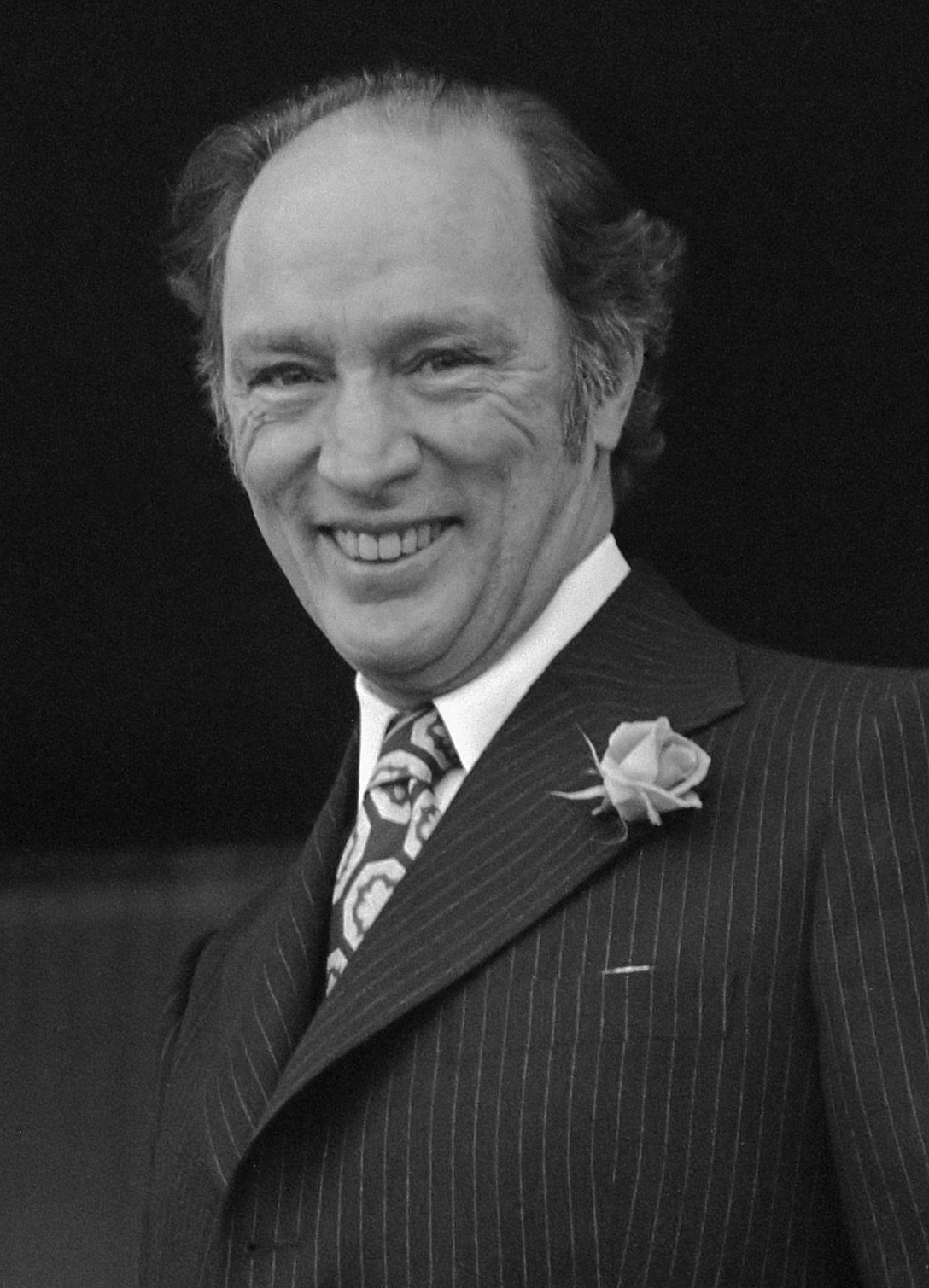
The Canadian Charter of Rights and Freedoms

How the rights of Canadians got engrained into the highest of laws.

Something I have neglected to mention until now, is the Canadian Charter of Rights and Freedoms. This was the main centrepiece of the brand new constitution. Before 1982, the closest thing Canada had to protecting rights was the Canadian Bill of Rights. But as we dicussed in class, the Bill of Rights was pretty useless in practice, and didn't apply to all levels of government. The creation of the charter was extremely similar to the constitution: A debate fest. Lobbying groups would argue for provisions like more rights for Indigenous peoples, and Quebec just wanted nothing to do with the charter. Unfortunely for Quebec, they would be forced to comply with the new Charter, because it would be engrained in the constitution.

Canadian Heritage, OGL-C 2.0, via Wikimedia Commons
Trudeau's update on the status of the Charter, explicitly stating his disappointment that Quebec hasn't signed it. (Refresh page to watch again)

Quebec was taking a lot of L's during this time, but they did get one W: The Notwithstanding clause. Section 33 of the Charter, also known as the Notwithstanding clause, allowed any level of government to make an exemption to the charter for certain legislature for 5 years. Unfortunately, this wasn't enough to warrant them signing it. Trudeau was in opposition of the section, however realized that it would be necessary if he wanted to get the provinces on his side. Trudeau knew when to stand his ground, and when to give in to further his overall goals. He saw the whole forest, not just the trees.

Impact & Connections

I have to connect this to our class somehow...

The patriation of the constitution, but more specifically the new Canadian Charter of Rights and Freedoms had a profound impact on the lives of Canadians. Did a new law unlawfully discriminate against a certain group? Not anymore. Stuck being assumed guilty and having to prove your innocence? Not on my watch. Canadians across the country no longer had to worry about ANY level of government infringing on their rights. The Canadian Bill of Rights only worked with the federal government, but the charter works country wide. Human rights now had a home in the constitution.

Prime Minister Diefenbaker displaying the Bill of Rights of 1958. (D. Cameron/National Archives of Canada/PA-112659)
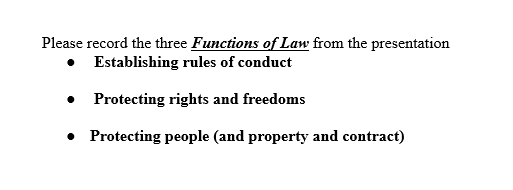
I ran out of image ideas so here is a picture of my work

Lets talk function of law. In no particular order we have: Establishing rules of conduct, protecting rights and freedoms, protecting people (and property & contract). Trudeau's changes mainly satisfied the second function of law. Shouldn't it be Canadians' right to make changes to their own constitution? Canadian's shouldn't have to worry about some random government legislature screwing around their with their human rights. The Charter ensures that rights and freedoms are engrained in the constitution, and are extremely difficult to mess with.